
Roses against stone, self-sown foxgloves and a path that does not hurry. How to compose a cottage garden that feels abundant, not chaotic.
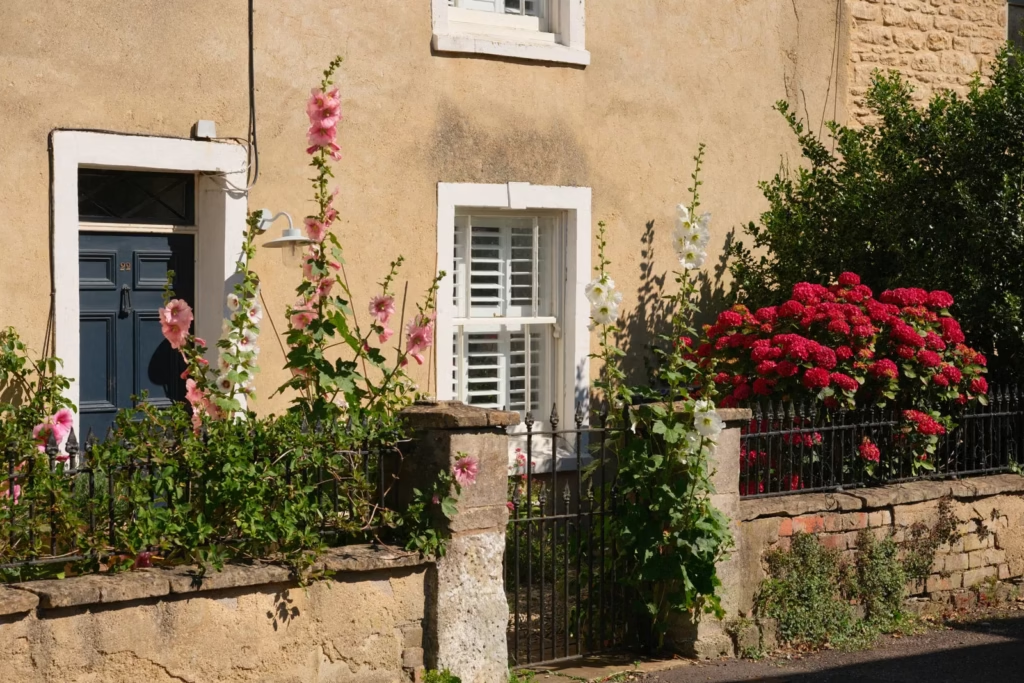
A cottage garden is not a style you install in a weekend. It is a conversation with plants that like to lean, seed and scramble. The best ones look as if they have always been there — even when the path was laid last autumn and the roses are only in their second year.
The secret is structure underneath the romance. A clipped hedge, a simple arch, a brick path with a destination: these hold the picture when the hollyhocks flop and the geraniums wander.

Let one climber take a wall. A single generous rose reads as character, not clutter.
Think of the border as a landscape in miniature. Tall verticals — foxgloves, delphiniums, verbascum — rise through a mid-layer of roses and peonies. At the front, allow alchemilla, thyme and erigeron to soften every hard edge. Leave gaps. Self-sown seedlings are how a cottage garden writes its own second draft.
Cottage style is generosity with an editor. Let plants mingle, but decide who is invited.
— Amara Quinn
The most successful cottage gardens always include a pause: a bench in a bay of planting, a table under an apple tree, a doorstep wide enough for a pot of scented pelargoniums. The point is not display. It is to live inside the picture.




Beautiful ideas, helpful tips and outdoor inspiration delivered to your inbox.
PetalShift is a fresh and inspiring gardening space created for people who love plants, flowers, and beautiful outdoor spaces. It focuses on simple gardening ideas, creative inspiration, practical tips, and easy ways to bring more natural beauty into everyday surroundings.